Access
Connect restricted areas with a defined urban consolidation point.

✦RoboVan for cities
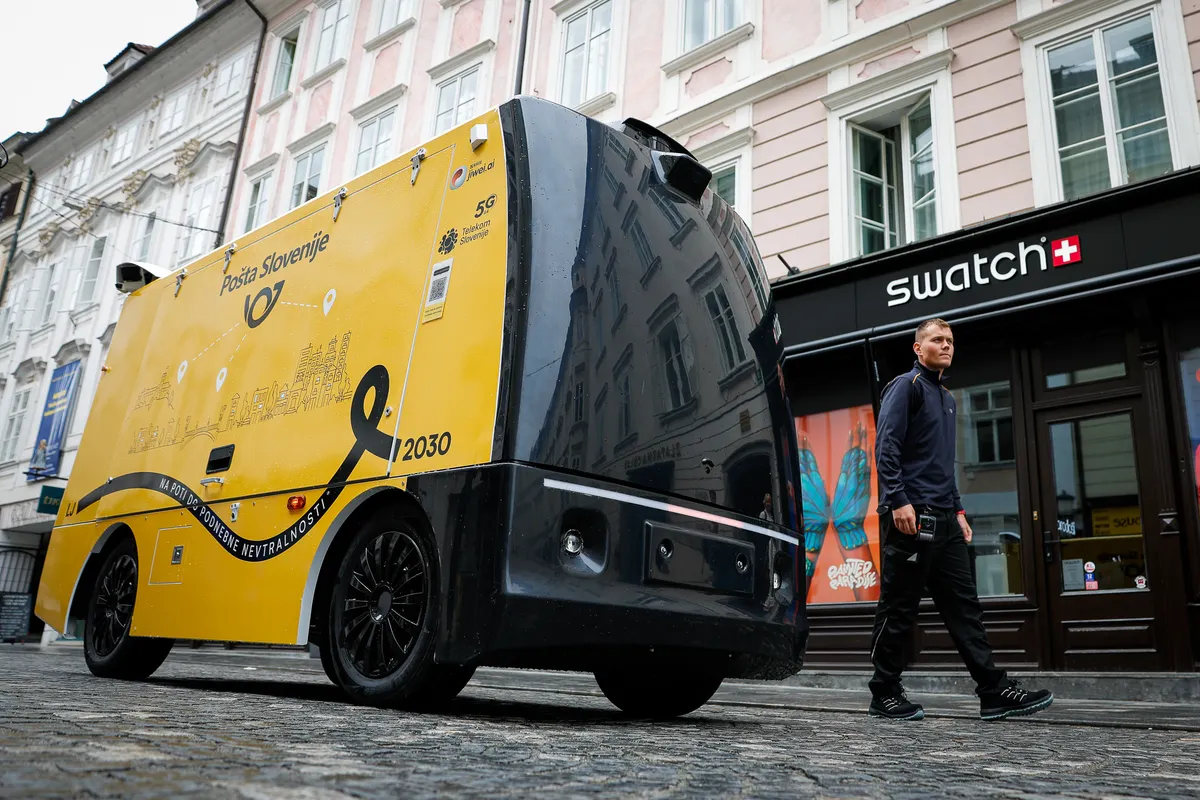
Humanicor helps cities test autonomous delivery between urban micro-hubs, businesses, public institutions and recipients through a controlled, measurable pilot.
✦The urban logistics challenge
A successful city-centre logistics model must balance accessibility, commercial activity, public-space quality, safety and the practical needs of postal and delivery operators.
Connect restricted areas with a defined urban consolidation point.
Set clear responsibilities, operating boundaries and escalation procedures.
Collect route, intervention and service data against agreed success criteria.
Evaluate the effect on city services, recipients, businesses and public space.
✦Pilot blueprint
Map access restrictions, delivery demand, stakeholders and micro-hub options.
Agree the route, supervision, delivery workflow, hours and responsibilities.
Set safety procedures, communications, reporting and success measures.
Operate the pilot, review evidence and decide whether to adapt, expand or stop.
✦A useful first workshop
✦Next step
Humanicor can structure an initial feasibility workshop around your local access rules, logistics demand and public objectives.
Request a city pilot